
What is the Air Quality Index, and how does it affect you?
As wildfire smoke becomes a more frequent visitor to places that rarely dealt with it before, the Air Quality Index has become an everyday tool rather than a niche one. Here's what it means, how it works, and what you can do to protect yourself when the numbers climb.
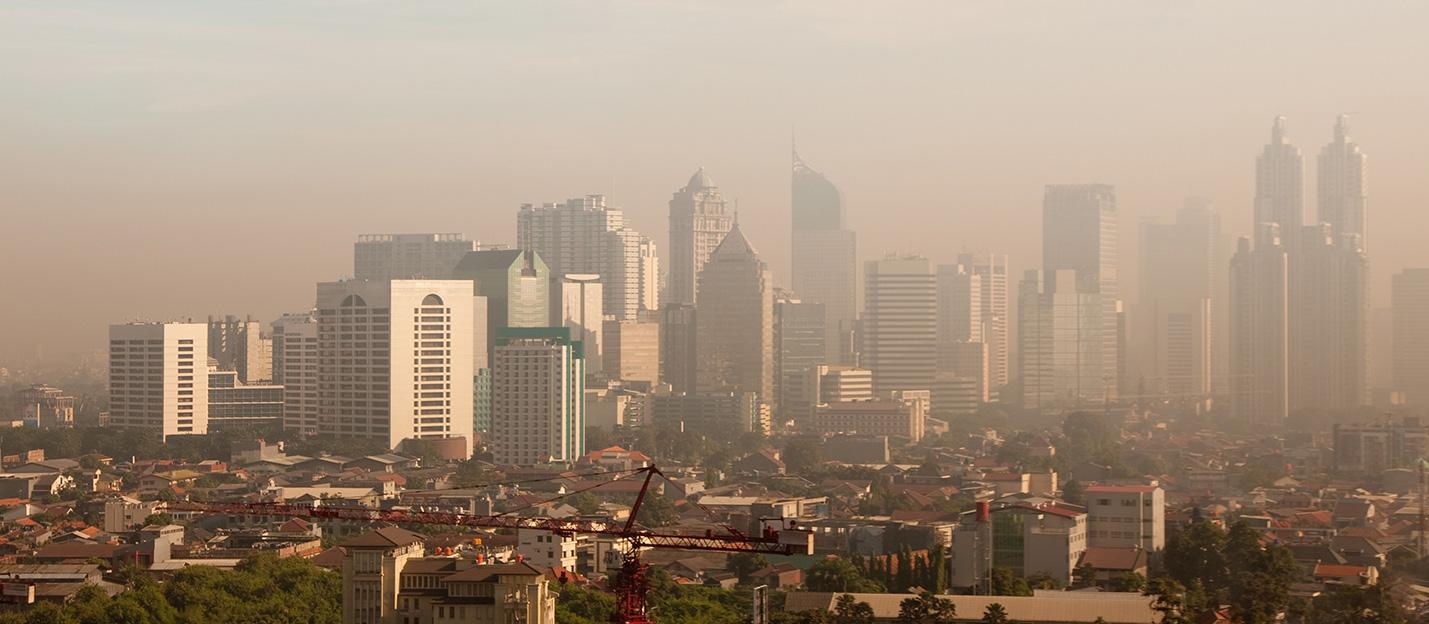
Key Takeaways
- The Air Quality Index (AQI) is a standardized 0-500 scale used to communicate how clean or polluted outdoor air is on a given day.
- The AQI is divided into six categories, from Good to Hazardous, each tied to specific health guidance.
- Wildfire smoke has become one of the fastest-growing contributors to poor air quality, with 2026 already producing record-setting smoke events across the western US and southern Europe.
- Fine particulate matter (PM2.5) — much of it from wildfire smoke — is typically the pollutant driving the AQI number on smoky days.
- Simple steps like checking the AQI before going outside, limiting outdoor exertion, and improving indoor air quality can meaningfully reduce health risk during poor air quality events.
What is air quality?
Air quality describes how clean or polluted the air is at a given place and time. It's determined by the concentration of pollutants suspended in the air, including fine particles from smoke and dust, ground-level ozone, and gases released by vehicles, industry, etc. Air quality changes depending on weather, wind direction, nearby fires, traffic patterns, and temperature, and sometimes it can change significantly within just a few hours.
What is the Air Quality Index (AQI)?
The Air Quality Index (AQI) is a scale that converts measured concentrations of outdoor air pollutants into a single number between 0 and 500. In the United States, it's calculated and published by the Environmental Protection Agency (EPA) based on data from monitoring stations around the country, and it's freely available through tools like AirNow.gov.
The US AQI is based on five major pollutants regulated under the Clean Air Act:
· Ground-level ozone
· Particulate matter (PM2.5 and PM10)
· Carbon monoxide
· Sulfur dioxide
· Nitrogen dioxide.
At any given time and location, whichever pollutant has the highest index value becomes the dominant pollutant and determines the reported AQI. When wildfire smoke is in the air, that dominant pollutant is almost always PM2.5, which is the fine particulate matter found in wildfire smoke.
Worth noting: in May 2024, the EPA updated the AQI's underlying breakpoints for PM2.5 to reflect newer health research showing risk even at lower concentrations. As a result, the same air quality conditions that might have registered as "Very Unhealthy" a few years ago could now register as "Hazardous." If you're comparing AQI charts or apps that haven't updated, that's usually why the numbers look different.
What do AQI numbers mean?
The AQI is divided into six color-coded categories. The higher the number, the greater the health concern:
AQI | Category | What it means |
0-50 | Good (Green) | Air quality is satisfactory and poses little or no risk. |
51-100 | Moderate (Yellow) | Acceptable air quality, though unusually sensitive individuals may experience minor effects. |
101-150 | Unhealthy for Sensitive Groups (Orange) | People with heart or lung disease, older adults, children, and teens may begin to experience health effects; the general public is less likely to be affected. |
151-200 | Unhealthy (Red) | Everyone may begin to experience health effects; sensitive groups may experience more serious effects. |
201-300 | Very Unhealthy (Purple) | Health alert: risk of health effects is increased for everyone. |
301-500 | Hazardous (Maroon) | Health warning of emergency conditions: the entire population is more likely to be affected. |
For context, an AQI of 100 generally corresponds to the national air quality standard for that pollutant. Below 100 is generally considered satisfactory; above 100, air quality starts to become unhealthy — first for sensitive groups, then for the general public as the number climbs further.
How to stay safe when air quality is poor
- Limit or reschedule outdoor time once AQI reaches Unhealthy for Sensitive Groups or higher, especially for children, older adults, and people with heart or lung conditions.
- Keep windows and doors closed during smoke events, and run HVAC systems on recirculate rather than pulling in outside air.
- Wear a well-fitted N95 or equivalent mask if you need to be outside during periods of poor air quality. Cloth and surgical masks don't filter fine particulate matter effectively.
- Watch for symptoms like coughing, throat irritation, shortness of breath, or chest tightness, and move to cleaner air if they develop.
- Improve indoor air quality with an air purifier since smoke and pollutants can seep indoors even with windows closed.
Can air purifiers help with poor air quality?
Air purifiers that use true HEPA filtration are designed to capture fine particulate matter, including the PM2.5 found in wildfire smoke, as air passes through the filter. Some models also include activated carbon filtration to help address odors and certain gases. For an air purifier to be effective, it generally needs to be sized appropriately for the room and run continuously during poor air quality periods.
If you're dealing with wildfire smoke or persistently poor air quality where you live, a HEPA air purifier is one of the more well-supported tools for improving the air inside your home, alongside the safety steps outlined above.
Press Contacts
-
Press Office
Email: USPR@dyson.com
-
¹ ² ³ U.S. EPA, "Strategies to Reduce Exposure Indoors" / "What is a HEPA Filter" (epa.gov)
4 https://www.epa.gov/wildfire-smoke-course/why-wildfire-smoke-health-concern
5 https://www.epa.gov/indoor-air-quality-iaq/improving-indoor-air-quality