Shop all upright vacuums
Dyson de-tangling technology
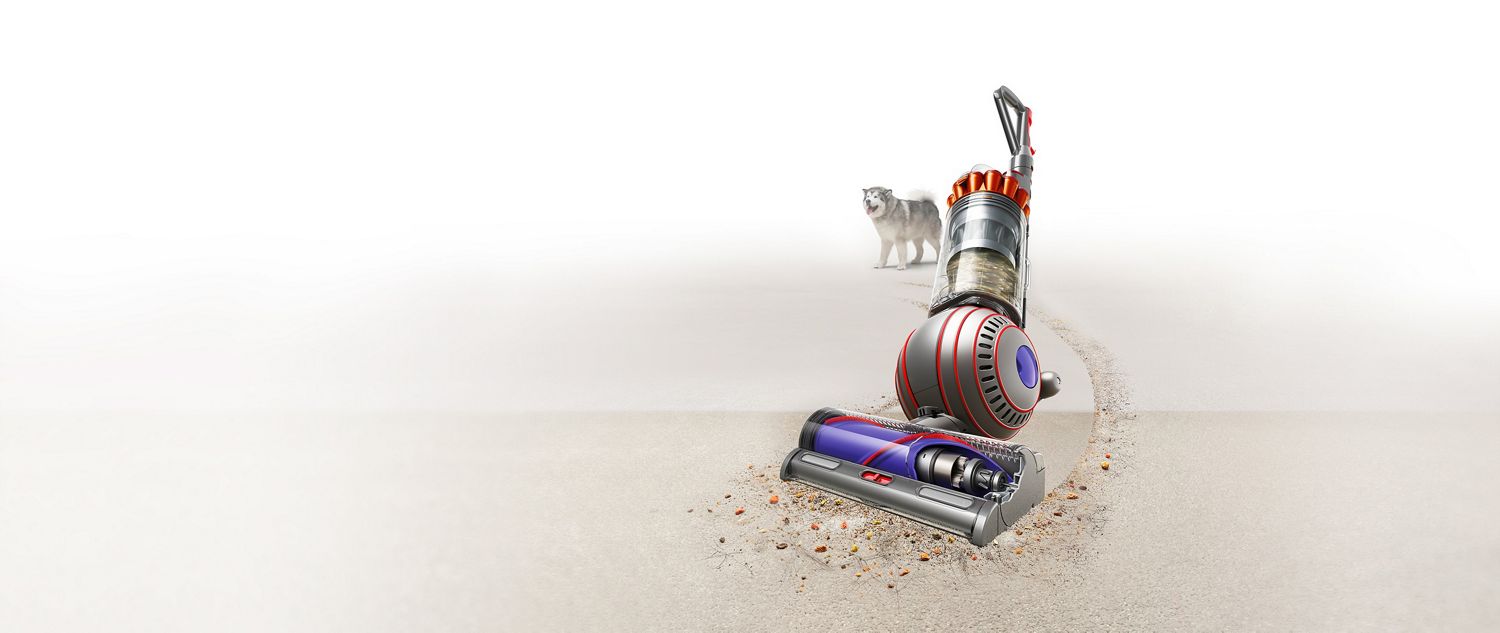
Cleans pet hair wherever it gets, and removes tangled pet hair. Engineered for homes with pets.
-
Motorbar™ cleaner head
Picks up long hair and pet hair fast. Hair de-tangling removal vanes automatically clear wrapped hair as you clean.
-
Tangle-free turbine tool
Counter-rotating heads with brushes remove hair from carpets, cars and upholstery. No more tangles.
FAQ
To clean the filter of your Dyson upright vacuum:
- First turn it off and unplug it.
- Locate the filter, remove it from its housing, and wash it under cold running water to remove all dirt and debris.
- Allow the filter to air dry completely before reinserting it back into the vacuum.
Unplug the vacuum and detach the bin by pressing the release button.
Hold the bin over a trash can and press the red button to release the bottom lid and empty the contents.
Whether canister vacuums or upright vacuums are better will depend on your specific needs and preferences.
Canister vacuums are generally better for cleaning stairs, upholstery, and hard-to-reach areas, as they are more versatile and have a longer hose.
Upright vacuums are better for cleaning large carpeted areas quickly and efficiently, as they have a wider cleaning path and often have more powerful motors.
An upright vacuum cleaner is a type of vacuum cleaner that is designed to stand upright and be pushed along the floor while cleaning.
It typically has a motorized brushroll at the base that agitates the carpet fibers to loosen dirt and debris, which is then suctioned up into a bin.
Upright vacuums are often larger and heavier than other types of vacuums, but they are also powerful and efficient for cleaning larger areas of carpet.
There are several upright vacuums on the market that are known for their strong suction power.
One of the top contenders is the Dyson Ball Animal 3, which has powerful suction and is designed to pick up pet hair and other stubborn debris.